
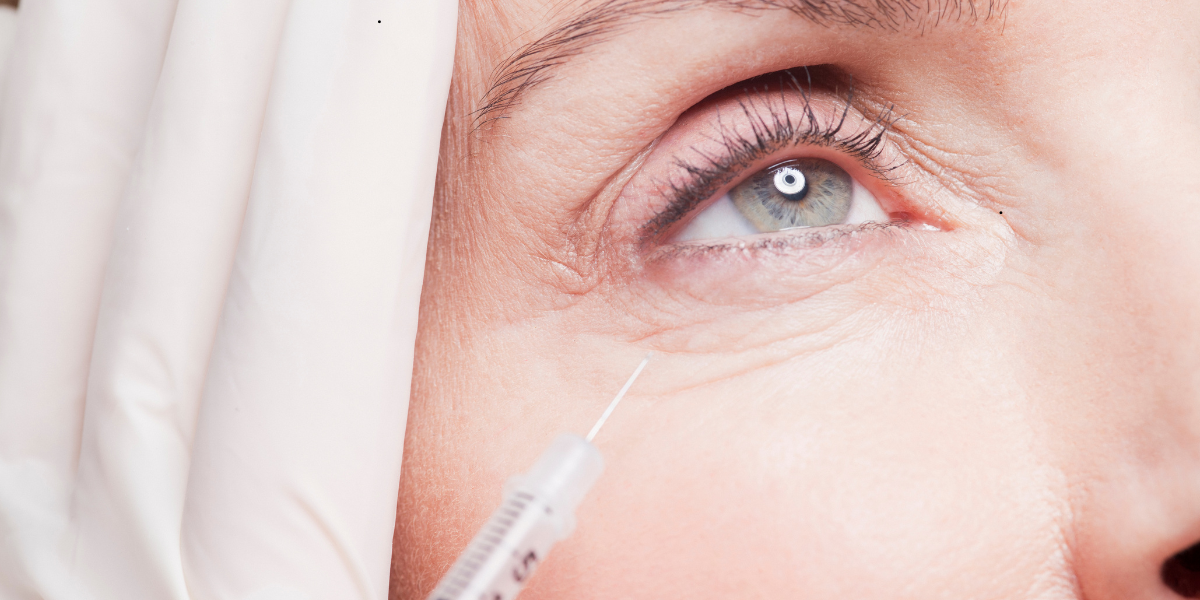
The honest guide to tear trough filler, from anatomy to aftercare, for anyone tired of looking tired.
| There is a specific kind of exhaustion that has nothing to do with sleep. It lives in the mirror. You slept eight hours, drank water, wore sunscreen every day of the last decade. And still, the hollows beneath your eyes cast small shadows that make you look perpetually drained. If this sounds familiar, you are not alone, and you are probably already wondering whether under-eye filler is the answer. |
It might be. But not for everyone, and not for every type of under-eye concern. This is the distinction that separates a transformative result from a disappointing one. Dermal fillers in Scottsdale can do remarkable things beneath the eyes when the right candidate meets the right injector. The key word in that sentence is “when.”
What Creates That Hollowed-Out Look
The under-eye area, clinically referred to as the tear trough, sits in a narrow groove that runs from the inner corner of the eye along the lower orbital rim. In youth, this groove is barely perceptible. A healthy layer of fat sits between the skin and the bone, softening the transition from lower eyelid to cheek. The skin itself is taut, well-hydrated, and thick enough to conceal the structures beneath it.
With age, several things happen at once. The fat pads that cushion the under-eye area begin to thin and descend. The bone of the orbital rim gradually resorbs, enlarging the eye socket and deepening the hollow. Collagen and elastin break down, leaving the skin thinner and more translucent. And as the midface loses volume overall, the cheek drops slightly, widening the gap between the lower eyelid and the cheekbone.
The result is a visible depression beneath the eye that catches shadow. In some people, this creates the appearance of dark circles. In others, it produces a sunken, skeletal quality that adds years to the face. The underlying issue is not pigmentation or fatigue. It is volume loss, and that is why concealer can only do so much.
| IT’S NOT ALWAYS ABOUT AGE
Genetics play a significant role in under-eye hollowing. Some patients in their twenties present with prominent tear troughs simply because of their bone structure or naturally thin skin. Others develop hollows after rapid weight loss. The cause matters less than the anatomy. If the hollow is the primary concern and the skin quality is still reasonable, filler is often a strong option regardless of age. |
How Under-Eye Filler Works
The concept is straightforward: a soft, smooth filler is placed beneath the skin of the tear trough to restore the volume that has been lost. The most commonly used fillers for this area are hyaluronic acid (HA) based products, such as Restylane and Juvederm. These are softer, lighter formulations specifically suited to the delicate tissue around the eyes.
During the procedure, a very small amount of filler is deposited along the tear trough, typically at the level of the periosteum (the tissue covering the bone) or just above it. This lifts the overlying skin, fills the depression, and softens the shadow that was creating the tired appearance. The entire treatment takes about fifteen to twenty minutes. Results are visible immediately, though the final outcome settles over the following two weeks as any initial swelling subsides.
One of the advantages of HA fillers is that they are reversible. If the result is not ideal, an enzyme called hyaluronidase can dissolve the product. This safety net is particularly valuable in such a visible and unforgiving area of the face.
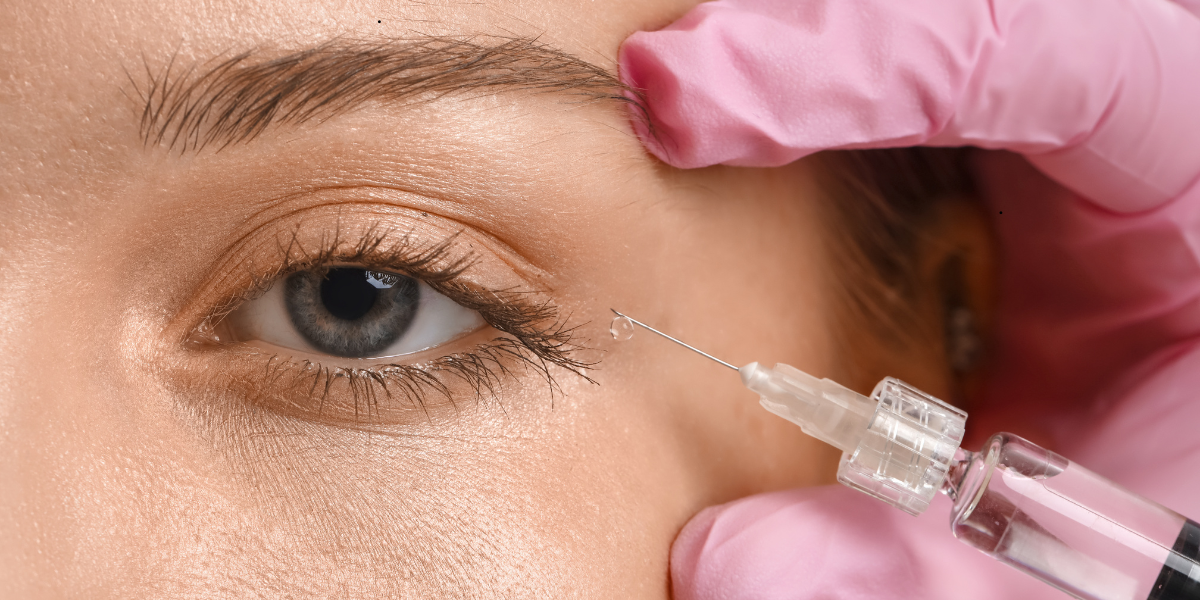
What Changes After Treatment
Well-placed tear trough filler accomplishes two things. It eliminates the shadow cast by the hollow, which is responsible for much of what people perceive as dark circles. And it smooths the transition between the lower eyelid and the cheek, restoring the gentle convexity that signals youth.
What to Expect Week by Week
| TIMEFRAME | WHAT TO EXPECT |
| Immediately | Visible improvement in the hollow. Mild swelling is common, which can temporarily make the area look slightly overfilled. This is normal and expected. |
| Days 1–3 | Swelling peaks. Some patients experience light bruising, particularly if a needle was used rather than a cannula. Cold compresses and arnica can help. |
| Week 1 | Swelling begins to resolve. The filler starts settling into its final position. You can begin to see the true shape of the result. |
| Weeks 2–4 | Full settling. The filler has integrated with the surrounding tissue, swelling has fully resolved, and the under-eye area appears smooth, natural, and refreshed. |
| Months 10–18 | Depending on your metabolism and the product used, results begin to gradually diminish. A maintenance appointment can restore the original correction. |
Who Should Consider It
Not every under-eye concern is best addressed with filler. This is perhaps the most important thing to understand before booking a consultation. The ideal candidate for tear trough filler has a specific profile, and deviating from it significantly increases the risk of an underwhelming or problematic result.
You are likely a strong candidate if:
- Your primary concern is a visible hollow or depression beneath the eyes, rather than puffiness, excess skin, or heavy bags. Filler replaces volume. It does not remove tissue or tighten skin.
- Your skin quality in the under-eye area is still relatively intact. Very thin, crepey, or highly transparent skin can show filler irregularities, making treatments like RF microneedling in Scottsdale, AZ or laser skin resurfacing a better first step.
Patients with significant under-eye bags caused by herniated orbital fat are generally better served by surgical evaluation. Filler placed over a fat pad can actually accentuate puffiness rather than reduce it. A thorough in-person assessment is the only way to make this determination accurately.
84%
overall patient satisfaction rate with tear trough filler,according to a systematic review of nearly 2,000 patients.
American Academy of Ophthalmology – Systematic Review
The Fillers We Use and Why
The under-eye area is uniquely unforgiving. The skin here is the thinnest on the face. There is minimal fat padding. And any irregularity, whether from the wrong product, the wrong volume, or the wrong depth of placement, becomes visible almost immediately. This is why product selection matters enormously.
At Aesthetic Assets, our team favors HA fillers in Scottsdale for the tear trough. Hyaluronic acid is naturally present in the body, integrates smoothly with tissue, and offers the critical advantage of reversibility. Among HA products, we select formulations with lower viscosity and a softer gel consistency, which minimizes the risk of visible lumps or the Tyndall effect (a bluish discoloration that can occur when filler is placed too superficially).
For patients whose under-eye hollows are connected to broader midface volume loss, we may recommend combining tear trough filler with cheek augmentation using a product like Juvederm Voluma. Restoring volume in the cheeks lifts the entire lower eyelid-cheek junction, reducing the depth of the hollow from below. In many cases, this combination approach produces a more natural result than treating the tear trough in isolation.
| WHY THE INJECTOR MATTERS MORE THAN THE PRODUCT
The periorbital region contains critical vascular structures, including branches of the angular artery. Imprecise injection carries risks that range from persistent swelling to vascular compromise. This is an area where credentials are not a formality. Our injectors bring over 53 years of combined experience and Allergan Diamond Partner status to every appointment. The under-eye area demands that level of expertise. |

What Under-Eye Filler Cannot Do
Honesty about limitations is what separates a trusted provider from a transactional one. Under-eye filler is exceptional at restoring lost volume and softening the tear trough. But it is not a solution for every concern people associate with “tired-looking eyes.”
It will not significantly lighten genetic pigmentation. Some dark circles are caused by melanin deposits in the skin rather than shadow from a hollow. If your circles remain visible even when you press gently on the skin and flatten the area, pigmentation is likely the dominant cause. Treatments like IPL photofacial in Scottsdale or chemical peels may be more appropriate in those cases.
It will not remove under-eye bags. Puffiness caused by fat herniation requires a different approach entirely. Placing filler beneath or around a fat pad can create a thicker, heavier appearance that makes the bags look worse, not better.
It will not tighten loose skin. If the primary concern is skin laxity or crepiness rather than volume deficit, skin-tightening procedures should be explored first. Filler adds volume. It does not contract tissue.
Combining Tear Trough Filler with Other Treatments
The under-eye area rarely exists in isolation. What is happening beneath the eyes is often a reflection of what is happening across the entire midface. This is why the best results frequently come from a layered approach.
| COMBINED CONCERN | PAIRING | WHAT IT ADDS |
| Hollows + midface deflation | Sculptra in Scottsdale | Biostimulatory collagen rebuilding in the cheeks provides structural lift that supports the tear trough from below, extending filler longevity. |
| Hollows + dull skin tone | DiamondGlow facial | A medical-grade resurfacing facial that exfoliates and infuses serums, brightening the periorbital skin and complementing the volumetric correction. |
| Hollows + fine lines around eyes | Botox in Scottsdale, AZ | Neuromodulator for crow’s feet softens dynamic lines while filler addresses the static hollow beneath. Together they refresh the entire eye area. |
| Hollows + overall facial aging | Non-surgical facelift in Scottsdale | A comprehensive plan combining injectables and skin treatments to address the full face as a cohesive unit rather than isolated zones. |
Aftercare That Protects Your Investment
The days following under-eye filler are important. Not because the recovery is difficult, but because the tissue around the eyes is so reactive that small missteps can introduce unnecessary swelling or bruising.
For the first 24 to 48 hours, avoid any activity that increases blood flow to the face. This means no vigorous exercise, no saunas, no hot yoga. Sleep with your head slightly elevated on the first night to minimize fluid accumulation. Avoid blood-thinning supplements like fish oil, vitamin E, and ibuprofen in the days leading up to and following treatment, as these increase bruising risk.
Do not massage or press on the treated area. The filler needs time to settle into position, and manipulation can shift it. If you notice asymmetry in the first few days, resist the urge to fix it yourself. Swelling often resolves unevenly, and what looks unbalanced on day three may look perfectly symmetrical by day ten.
Beyond the immediate recovery, protecting your under-eye skin with medical-grade skincare and consistent SPF is essential. Filler restores volume, but it does not protect the skin from UV damage or further collagen degradation. Think of filler as one layer in a broader skin health strategy.
“When someone looks rested and you can’t figure out why,that is the sign of work done well.”
How Long Results Last
The longevity of under-eye filler depends on the product used, the volume injected, and your individual metabolism. Most patients enjoy results for ten to eighteen months. Some find their correction lasts even longer, particularly with lighter HA fillers that integrate deeply along the periosteum and experience minimal mechanical stress.
| Ready to Address Your Under-Eye Hollows?
Book a consultation with our team to find out whether tear trough filler is the right approach for your anatomy and goals. |
Frequently Asked Questions
Is under-eye filler painful?
Most patients rate the discomfort as mild. A topical numbing cream is applied before the procedure, and many of the fillers used contain lidocaine for additional comfort during injection. The sensation is typically described as slight pressure rather than pain.
Can under-eye filler go wrong?
In inexperienced hands, yes. Potential complications include the Tyndall effect (a bluish hue under the skin), lumps, prolonged swelling, and in rare cases, vascular events. These risks are significantly minimized by choosing an injector with specific tear trough expertise and a conservative injection philosophy.
How much filler do I need?
Most patients require one syringe total, divided between both eyes. Some patients with deeper hollows or concurrent midface volume loss may benefit from additional product in the cheeks. Your injector will determine the right volume during consultation.
Will people be able to tell I had something done?
When performed well, no. The goal is to eliminate the shadow and restore a natural contour. You should look rested, not filled.
Can I wear makeup afterward?
It is best to keep the treated area free of makeup for the remainder of the day. You can resume your normal routine the following morning.