

The biology behind the process, what each session accomplishes, and why patience is the real strategy.
| You booked your first laser hair removal session expecting to walk out smooth and done. A few weeks later, hair grew back. You wondered whether the treatment failed, whether the laser was too weak, whether you wasted your money. None of those things are true. What happened is biology, and understanding it changes everything about how you approach the process. |
The question patients ask most often is simple: why can’t one session finish the job? It is a fair question with a satisfying answer rooted in how hair actually grows. Laser hair removal in Scottsdale works with impressive precision. But it can only target what is available to be targeted at the time of treatment. And at any given moment, a significant percentage of your hair follicles are essentially invisible to the laser.
This is the reason a full treatment series typically involves six to eight appointments spaced several weeks apart. Each session catches a new group of follicles at the right biological moment. Skip a session or stop too early, and you leave entire populations of follicles untreated.
The Hair Growth Cycle, Explained
Every hair on your body follows an independent growth cycle. The follicle produces a strand, holds it for a period, lets it go, rests, and starts again. This cycle has four distinct phases, and only one of them matters for laser treatment.
During the anagen phase, the hair is actively growing. The strand is firmly rooted in the follicle, nourished by a blood supply at the base, and packed with melanin from root to tip. This pigment is the laser’s target. When the laser fires, the melanin in the hair shaft absorbs the light energy and converts it to heat. That heat travels down the shaft and damages the follicle itself, impairing its ability to produce new hair.
The catagen phase is a brief transitional window. The hair detaches from its blood supply, the follicle contracts, and the strand begins to separate from the root. A laser pulse delivered during catagen has far less to work with. The hair is already disconnecting, so the thermal damage cannot travel efficiently to the follicle’s reproductive structures.
Then comes the telogen phase, a resting period during which the follicle sits dormant. The old hair may still be loosely anchored in the skin, but it is no longer connected to the growth apparatus below. Laser energy delivered here passes through without meaningful consequence.
Finally, the exogen phase: the old strand sheds, the follicle resets, and a new anagen cycle begins.
WHY THIS MATTERS FOR YOUR TREATMENT PLAN
At any given moment, only about 20 to 30 percent of your hair follicles are in the anagen phase. The rest are resting, transitioning, or shedding. This is why a single laser session, no matter how powerful the device, can only affect a fraction of the total hair in a treatment area. The follicles that were dormant during session one will eventually cycle into anagen, and that is when the next session catches them.
What Each Session Actually Accomplishes
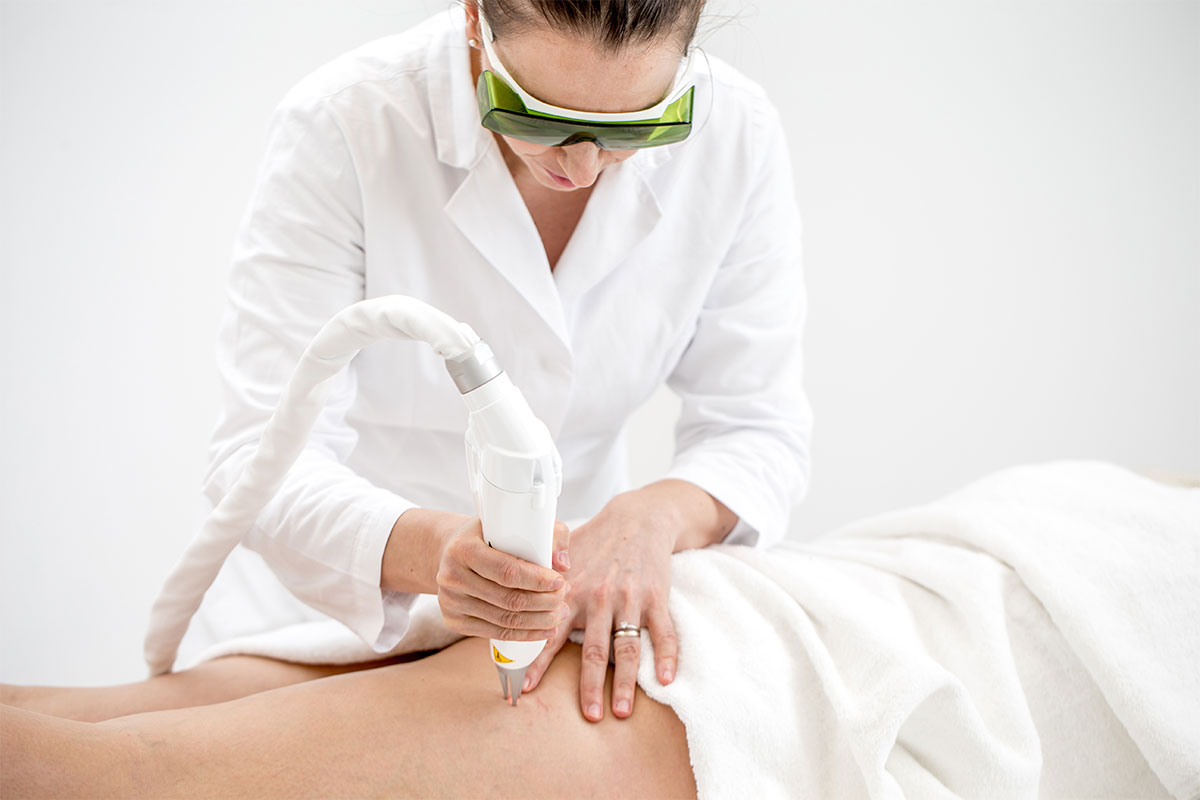
Think of laser hair removal as a series of passes through a revolving door. Each session catches the follicles that happen to be in the right phase at that moment. Session one treats roughly 20 to 30 percent of the hair. Six weeks later, a new group of follicles has entered anagen, and session two treats those. The pattern continues, session after session, until the vast majority of follicles in the area have been addressed.
Patients typically notice a visible reduction after the first appointment. The treated hairs shed over the following one to two weeks, leaving behind smoother skin. But new growth appears a few weeks later as previously dormant follicles wake up and begin producing hair. This is often the moment when people assume the treatment did not work. In reality, this new growth represents an entirely different group of follicles that the laser has not yet had a chance to reach.
By sessions four and five, the cumulative effect becomes unmistakable. Hair grows back finer, lighter, and more sparsely. The intervals between regrowth lengthen. Many patients report that shaving between sessions drops from daily to weekly to rarely.
Session-by-Session: What to Expect
| SESSION | WHAT TO EXPECT |
| 1 | Targets the first wave of anagen-phase follicles. You will notice shedding of treated hairs within one to two weeks. Regrowth appears within four to six weeks as dormant follicles activate. |
| 2 | Catches the next group of follicles that have cycled into active growth. Overall hair density begins to decrease visibly. Remaining hair may appear finer. |
| 3–4 | Cumulative reduction becomes clear. Many patients report significantly less hair, slower regrowth, and softer texture. Shaving frequency drops considerably. |
| 5–6 | The majority of treatable follicles have been addressed. Hair that remains is typically sparse, fine, and much lighter in color. Some patients are satisfied at this point. |
| 7–8 | Final sessions target the stragglers. Follicles with longer or irregular growth cycles that were dormant during earlier treatments. These sessions bring the result from good to excellent. |
Why the Spacing Between Sessions Matters as Much as the Sessions Themselves
Appointments are spaced four to eight weeks apart for a reason that has everything to do with biology and nothing to do with scheduling convenience. The interval is calibrated to the hair growth cycle of the treatment area.
Facial hair tends to cycle faster, influenced heavily by hormones, so sessions for the upper lip or chin are often scheduled every four to six weeks. Body areas like the legs, back, and arms have longer growth cycles, and treatments are typically spaced six to eight weeks apart. Coming in too early means fewer follicles have cycled into anagen, which wastes a session. Waiting too long means treated follicles may have already begun to recover.
Consistency is the variable patients control. The laser and the growth cycle handle the biology. Sticking to the recommended schedule is what keeps the two in sync.
Why Some Body Areas Need More Sessions Than Others
The number of sessions required varies by body area, and this variation comes down to two factors: the percentage of follicles in anagen at any given time, and the hormonal influence on the hair in that region.
The underarms and bikini area tend to respond well to laser treatment, with a high concentration of anagen-phase follicles and relatively predictable growth patterns. Many patients see satisfying results in six sessions. The legs, with their longer telogen phase, may require seven or eight.
Facial hair is the most unpredictable. Hormonal fluctuations, particularly those driven by conditions like polycystic ovary syndrome (PCOS), can cause follicles on the face to cycle erratically. Patients addressing unwanted facial hair may need additional sessions beyond the standard series, and occasional maintenance appointments afterward.
87.9%
of patients in a long-term follow-up study reported that their
hair reduction results sustained after 11.5 years.
The Role of Skin Tone and Hair Color
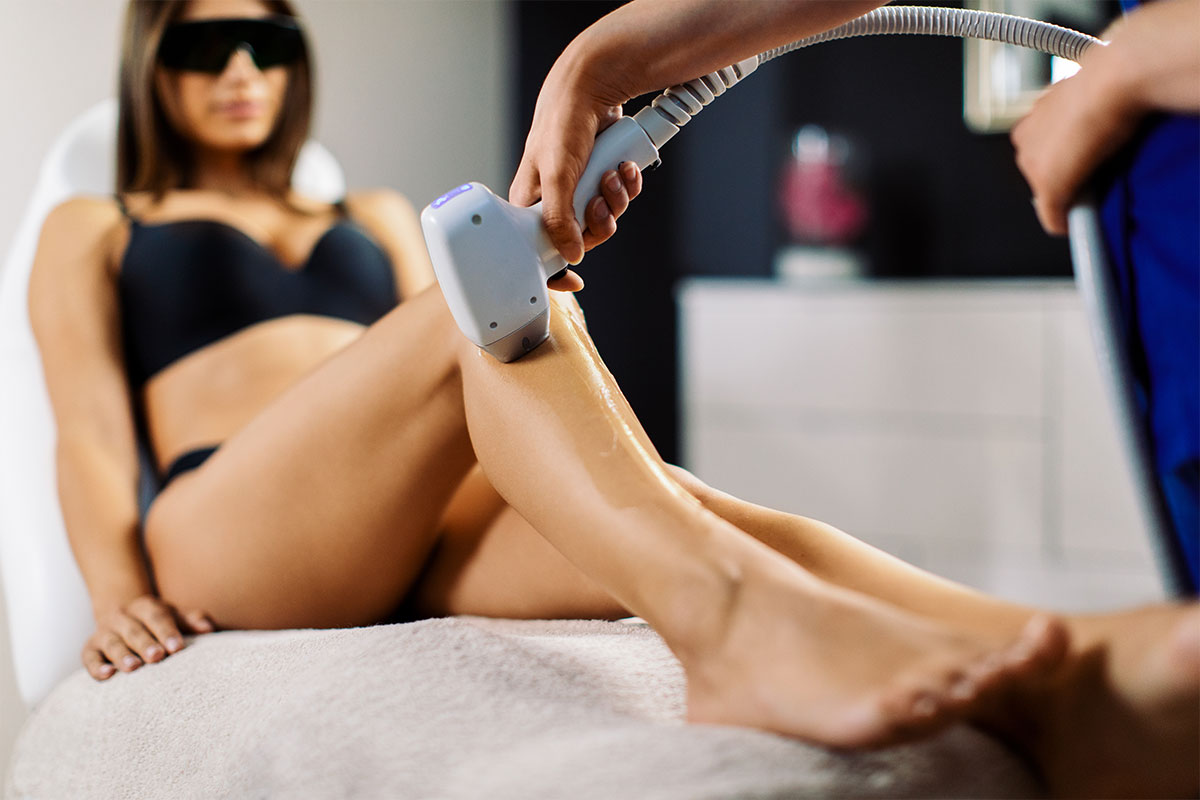
Laser hair removal depends on a contrast between the pigment in the hair and the pigment in the surrounding skin. The laser targets melanin in the hair shaft. When the hair is dark and the skin is lighter, the laser can distinguish between the two with high specificity, delivering energy to the follicle without affecting the surrounding tissue.
Patients with darker skin tones require a laser platform that uses a longer wavelength, such as the Nd:YAG, which penetrates deeper and bypasses the melanin in the epidermis. This is one of the reasons that device selection matters enormously. At Aesthetic Assets, we use the Lutronic Clarity II, which combines both Alexandrite (755nm) and Nd:YAG (1064nm) wavelengths. This dual-wavelength platform allows our team to customize treatment parameters for a wide range of skin types on the Fitzpatrick scale.
Blonde, red, gray, and white hair contain less melanin, which limits the laser’s ability to generate sufficient heat at the follicle. Patients with very light hair may need more sessions or may not be ideal candidates, depending on the shade and distribution.
| WHAT ABOUT HORMONAL HAIR GROWTH?
Hormones are the single biggest wildcard in laser hair removal outcomes. Conditions like PCOS, thyroid disorders, and hormonal shifts during perimenopause can stimulate new follicles to produce terminal hair even after a complete treatment series. This does not mean the original sessions failed. The follicles that were treated remain impaired. But new follicles can activate under hormonal influence, which is why some patients benefit from annual maintenance sessions to stay ahead of hormonally driven regrowth. |
Factors That Affect Your Total Number of Sessions
Six to eight is the standard recommendation, but the actual number depends on a combination of individual variables. Understanding these helps set realistic expectations from the start.
Hair density and coarseness. Thicker, coarser hair absorbs laser energy more readily and often responds faster. Finer hair requires more sessions because there is less melanin per strand to absorb the light.
Hormonal status. Active hormonal conditions or medications that influence androgen levels can stimulate ongoing hair production, extending the treatment timeline.
The treatment area itself plays a significant role as well. Larger areas like the full legs or back naturally require more coverage per session, and the growth cycles in these regions tend to be longer. Smaller, hormonally active areas like the chin may cycle faster but produce more persistent regrowth.
Your provider should outline an estimated treatment plan during your initial consultation, based on your specific hair type, skin tone, and the areas you want to address. At our Scottsdale medical spa, that plan is built around your anatomy, not a one-size-fits-all protocol.
Common misconceptions that lead to frustration
“The hair grew back, so it didn’t work.”
The hair you see returning after a session is overwhelmingly from follicles that were dormant during treatment. The follicles that were successfully targeted during anagen are damaged and will either stop producing hair entirely or produce much finer, lighter strands. Regrowth between sessions is expected and is the very reason you need more than one appointment.
“More frequent sessions will speed up results.”
Coming in every two weeks instead of every six does not accelerate the process. The growth cycle operates on its own schedule. Treating the same group of dormant follicles repeatedly accomplishes nothing. Proper spacing ensures each session targets a fresh cohort of active follicles.
“All lasers are the same.”
They are not. Diode, Alexandrite, and Nd:YAG lasers operate at different wavelengths, penetrate to different depths, and interact with melanin differently. The right laser for your treatment depends on your skin type and hair characteristics. A provider using a single-wavelength device may achieve good results on some patients but poor results on others. This is why platform versatility and clinical judgment both matter.
What to Do (and Avoid) Between Sessions
The weeks between appointments are where patients have the most control over their results. The single most important guideline: do not pluck, wax, or use an epilator on the treatment area. These methods remove the hair from the follicle entirely, which means there is no melanin-rich target for the laser at your next session. Shaving is fine because it cuts the hair at the surface without disturbing the root.
Sun exposure is the other major variable. Tanned or sun-damaged skin changes the contrast ratio between the hair and the surrounding tissue, which can reduce the laser’s efficacy and increase the risk of side effects like hyperpigmentation. Wear broad-spectrum SPF on treated areas, particularly if you spend time outdoors. If you are also addressing pigmentation concerns or skin discoloration in Scottsdale, AZ, your provider may recommend an adjusted schedule around sun-intensive months.
“The patients who get the best results are the ones who finish the full series. Consistency and timing do more for the outcome than any single piece of technology.”
What happens after the full series
Completing six to eight sessions does not guarantee that every follicle in the treatment area has been permanently disabled. The clinical expectation, supported by peer-reviewed research, is a long-term reduction of 70 to 90 percent. For most patients, that translates to dramatically less hair, dramatically less maintenance, and skin that stays smooth with minimal effort.
Some patients choose to schedule one or two maintenance sessions per year, particularly for hormonally influenced areas like the face and bikini line. Others find that their results hold without additional treatment. The trajectory depends on your individual biology, hormonal status, and the area treated.
For patients looking to complement their laser results with broader skin improvements, treatments like IPL photofacial in Scottsdale can address residual pigmentation and redness, while chemical peels refine skin texture in areas where repeated shaving or waxing left behind roughness or discoloration.
| Ready to Start Your Treatment Series?
Book a consultation at Aesthetic Assets to learn how many sessions your hair type and skin tone will likely require, and build a treatment plan designed for lasting results. |
Frequently Asked Questions
How many sessions will I need?
Most patients need six to eight sessions for optimal results. The exact number depends on the treatment area, your hair type, skin tone, and hormonal profile. Your provider will give you a personalized estimate during your consultation.
Does laser hair removal hurt?
Modern laser platforms like the Lutronic Clarity II include built-in cooling systems that minimize discomfort. Most patients describe the sensation as a warm snap against the skin. Sensitive areas like the bikini line tend to be slightly more intense than areas like the legs or arms.
Can I shave between sessions?
Yes. Shaving is the only hair removal method you should use between laser appointments. It removes hair at the surface while leaving the follicle and its melanin intact for the next session. Avoid waxing, plucking, threading, and epilating.
Is laser hair removal permanent?
The FDA classifies it as permanent hair reduction rather than permanent hair removal. After a full series of treatments, most patients experience a 70 to 90 percent reduction in hair growth. Some fine or hormonally driven regrowth may occur over time, which is why occasional maintenance sessions can be beneficial.
What if I have a darker skin tone?
Laser hair removal is safe and effective for darker skin tones when the right wavelength is used. The Nd:YAG laser at 1064nm is specifically designed to bypass epidermal melanin and target the follicle safely. Our Lutronic Clarity II platform supports this wavelength, making it suitable for patients across the Fitzpatrick scale.